
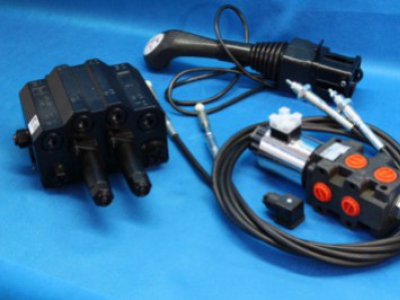
Hydraulic Joystick Loader Valve: Key Features, Operation, and Applications
The hydraulic joystick loader valve is a widely used component in vehicles and hydraulic systems that require human operation. These valves are commonly found in loaders, diggers, and occasionally in cranes. Offering precise control and ease of use, the hydraulic joystick loader valve is essential for managing complex hydraulic systems, enabling smooth and efficient operation of machinery.
Design and Function of Hydraulic Joystick Loader Valves
Hydraulic joystick loader valves are primarily multi-section and multi-way valves, allowing them to control multiple hydraulic cylinders or actuators simultaneously. While the lever resembles a standard console or computer joystick, the internal mechanics operate similarly to a traditional directional hydraulic valve.
In simple terms, a hydraulic joystick loader valve is a sealed tube containing one or more pistons, with several connection ports (holes) for attaching hoses. These hoses deliver hydraulic fluid to the pistons, which are powered by the hydraulic pump. The valve directs the flow of hydraulic oil from the pump to the hydraulic cylinders, which drive the movement of the loader or other machinery.
The hydraulic joystick loader valve can be used in either a closed or open circulation hydraulic system, depending on the application.
Operation and Control Mechanisms
The primary method of control for hydraulic joystick loader valves is the manual lever, which allows the operator to direct the flow of oil through the valve. The joystick is designed to perform specific tasks based on the operator’s movements, with each position of the lever corresponding to a different action.
Most hydraulic joystick loader valves have three or five positions:
- Neutral Position: The lever is positioned vertically, and the hydraulic fluid is sent to the overflow, leaving the piston stationary.
- Work Position (Extend): The lever is pushed forward, causing the piston to extend, which moves the hydraulic cylinder.
- Work Position (Retract): The lever is pulled backward, retracting the piston and returning the hydraulic cylinder to its original position.
For valves with five-position levers, the left and right movements are often used to control lateral or side movements, providing greater versatility in loader operations.
Many hydraulic joystick loader valves are equipped with spring-loaded levers for safety and ease of use. The spring mechanism ensures that the lever returns to its neutral position when released, stopping the loader’s movement until the next command is given. This feature helps prevent accidental movements, enhancing safety for the operator and the surrounding environment.
Electric and Hybrid Control Options
While manual levers are the standard for hydraulic joystick loader valves, many modern systems incorporate electric controls for added convenience. These systems use solenoids or servomotors to move the piston within the valve, allowing for remote or automated operation. This hybrid setup combines the precision of manual control with the comfort and efficiency of electric actuation, making it ideal for more complex machinery where operators may need to control multiple functions simultaneously.
Key Parameters of Hydraulic Joystick Loader Valves
Several factors define the performance and suitability of hydraulic joystick loader valves for specific applications:
- Piston and Thread Diameters: These determine the valve’s compatibility with various hydraulic systems and the volume of fluid that can pass through.
- Flow Efficiency: Measured in liters per minute (LPM), flow efficiency indicates how much hydraulic fluid the valve can handle during operation.
- Maximum Pressure: This defines the highest amount of pressure the valve can withstand before risking failure or malfunction.
Another critical specification for hydraulic joystick loader valves is the number of possible directions the lever can move. This determines the range of control the operator has over the hydraulic system, with more directions offering increased versatility.
Operating Conditions
Hydraulic joystick loader valves are designed to operate in extreme conditions, ensuring reliability and durability. They can function in ambient temperatures ranging from -40°C to +60°C, while the hydraulic oil temperature should be maintained between -15°C and +80°C. The type of oil required for the valve depends on the specific model and manufacturer’s recommendations, ensuring optimal performance and longevity.
Applications of Hydraulic Joystick Loader Valves
Hydraulic joystick loader valves are primarily used in machines that require fine-tuned control over hydraulic systems, including:
- Loaders: Joystick loader valves allow operators to precisely control the movements of the loader’s arms and attachments, such as buckets or forks, ensuring smooth and accurate operation.
- Diggers: These valves are essential for controlling the hydraulic cylinders that move the digging arm, providing the operator with precise control over excavation tasks.
- Cranes: In some cases, hydraulic joystick valves are used to control the lifting and lowering mechanisms in cranes, especially when manual control is preferred for specific operations.
The combination of manual and electric control options makes these valves versatile and adaptable for various industries, from construction and agriculture to material handling and transportation.
Conclusion
The hydraulic joystick loader valve is a vital component for machines that require precise and reliable control of hydraulic systems. With manual, electric, or hybrid control options, these valves offer flexibility and ease of use, allowing operators to handle even the most demanding tasks with precision. Whether in loaders, diggers, or cranes, hydraulic joystick loader valves are indispensable for smooth, efficient, and safe operation in numerous industries. Their robust design, coupled with advanced control mechanisms, ensures they remain a popular choice for professionals worldwide.
Photo Gallery


Do you need help?

Contact with us today!
We will help you select right kit. Contact us today at shop@hydraulic-master.com