
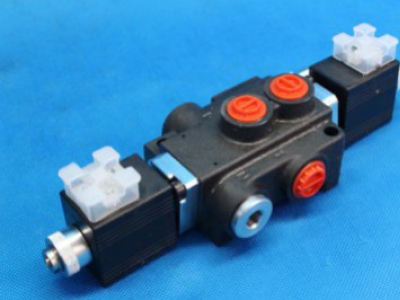
Single Spool Hydraulic Valve: Key Features, Operation, and Applications
A single spool hydraulic valve is a crucial component used in controlling hydraulic systems, found in applications ranging from automotive power-steering systems to heavy machinery such as cranes, loaders, and diggers. This type of valve manages the flow of hydraulic fluid from the pump to an actuator, controlling the movement of hydraulic systems in various industrial machines.
Construction and Operation of Single Spool Hydraulic Valves
The design of a single spool hydraulic valve is relatively simple. It consists of a sealed case with a cylinder inside, known as the spool. The valve has ports to connect hydraulic hoses—one hose brings hydraulic fluid from the pump, while the other directs fluid to an actuator or hydraulic device. The fluid under pressure flows into the valve and is directed by the position of the spool, either to the hydraulic device for operation or back to the storage tank.
The spool itself is designed with lands and grooves. The lands block the flow of oil, while the grooves allow the fluid to pass around the spool and through the valve body. By moving the spool into different positions, the valve controls the direction and flow of hydraulic fluid, allowing it to perform a specific task, such as extending or retracting a hydraulic cylinder.
Types of Single Spool Hydraulic Valves
Single spool hydraulic valves are versatile and can be categorized into several types based on their function:
- Directional Valves: These valves control the direction of fluid flow, allowing the operator to change the direction of movement in the hydraulic system.
- Check Valves: These prevent the backflow of hydraulic fluid, ensuring it moves in only one direction.
- Drain Valves: Used to release excess hydraulic fluid from the system, preventing overpressure.
- Shut-off Valves: These completely stop the flow of hydraulic fluid, isolating parts of the system for maintenance or safety.
Direct-Operated vs. Pilot-Operated Valves
Single spool hydraulic valves can be classified as direct-operated or pilot-operated, depending on how they are actuated:
Direct-Operated Valves: In direct-operated valves, the spool is controlled directly, either manually or electrically. Manual operation typically involves using levers or paddles, where the operator applies force to move the spool. The valve may also be electrically controlled using solenoids, which move the spool when electrical power is applied.
Pilot-Operated Valves: In systems requiring more force, a pilot-operated valve may be used. A low-power solenoid valve, called the pilot valve, is used to control the flow of hydraulic fluid to a larger, main valve. This allows the larger valve to be operated with minimal effort, even when high forces are needed.
Control Methods for Single Spool Hydraulic Valves
The single spool hydraulic valve can be controlled through a variety of methods, each offering different advantages depending on the system’s requirements:
Manual Control: Manually operated valves use simple levers or paddles, allowing the operator to physically move the spool to control fluid flow. In some cases, spring mechanisms are added to return the valve to its neutral position once the lever is released.
Electrical Control: Electrically operated single spool valves utilize electromechanical solenoids to shift the spool. These are popular in systems where remote or automated control is required. However, solenoids have limited force capacity unless supplied with large amounts of electrical power. Additionally, over time, solenoids can generate heat, which limits their ability to operate continuously.
In some configurations, pilot-operated systems are used, where a small, low-power solenoid controls a pilot valve, which then drives the larger hydraulic valve. This setup is commonly used in heavy-duty applications requiring high force but minimal direct control effort.
Applications of Single Spool Hydraulic Valves
Single spool hydraulic valves are found in a variety of industries due to their simplicity and reliability. Common applications include:
Automotive Power-Steering Systems: Single spool valves control the hydraulic fluid that powers the steering mechanism, providing smooth and responsive steering.
Construction Machinery: Cranes, loaders, and excavators use single spool valves to control hydraulic cylinders that perform tasks such as lifting, digging, or rotating.
Industrial Systems: In industrial applications, these valves manage the flow of hydraulic fluid to actuators or motors, allowing machines to perform a range of movements with precision.
Conclusion
The single spool hydraulic valve is a fundamental component in hydraulic systems, offering precise control over fluid direction and flow. Whether manually or electrically controlled, these valves are integral to the operation of machinery in industries ranging from automotive to construction. By choosing the appropriate type of valve, businesses can optimize their hydraulic systems for reliability, performance, and efficiency.
Photo Gallery
-Photoroom.jpg)
-Photoroom.jpg)
-Photoroom.jpg)
Do you need help?

Contact with us today!
We will help you select right kit. Contact us today at shop@hydraulic-master.com