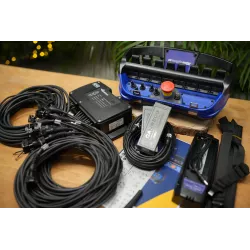
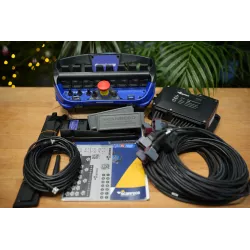
Reaching New Heights: Scanreco Radio Remote Controllers for Aerial Platforms
Aerial platforms, like boom lifts and scissor lifts, are essential for performing tasks at height in industries such as construction and maintenance. While a worker typically operates from the platform itself, remote radio control systems are enhancing safety and efficiency by allowing control from the ground or by providing more precise maneuvering. These wireless systems use radio waves to manage hydraulic functions, making aerial platform operations smoother and safer. In this post, we’ll explore the benefits of remote controls for aerial platforms and how they’re improving work in various industries.
What are Aerial Platforms?
Aerial platforms, also known as mobile elevating work platforms (MEWPs), are hydraulic devices designed to lift workers or equipment to elevated work areas. These machines come in various forms, such as boom lifts, scissor lifts, and cherry pickers, and are commonly used in construction, maintenance, and repair work.
The primary purpose of an aerial platform is to provide safe access to hard-to-reach locations, often at significant heights. A typical platform can carry one or two workers along with their tools, allowing them to perform overhead tasks such as installing signage, cleaning windows, or repairing infrastructure.
One of the main advantages of aerial platforms is their versatility. They are compact, easy to maneuver, and can be customized with different attachments or features to suit specific jobs. Whether indoors or outdoors, aerial platforms offer a reliable solution for tasks that require both elevation and stability.
The Role of Remote Radio Controls in Aerial Platforms
Remote radio controls have revolutionized the way aerial platforms are operated, making them safer and more efficient. Traditionally, an operator would control the platform from within the machine, but with the introduction of remote systems, key functions can now be managed from the ground or a distance.
These remote controls use radio signals to communicate with the aerial platform’s hydraulic system, allowing for smooth, precise movements of the platform's lift, rotation, or extension. This wireless technology gives operators better flexibility—someone can control the platform from the ground while workers are on the lift, or the operator on the platform can have finer control over its movement.
In addition to improving safety by reducing the need for constant manual operation on the platform, remote radio controls also enhance productivity. Workers can easily adjust their position without relying on a secondary operator or stepping off the platform to make adjustments. These systems are especially beneficial in environments where space is limited, or where the platform needs to navigate around obstacles.
Overall, remote radio control systems offer an ideal solution for aerial platforms, providing greater convenience, better precision, and improved safety for workers at height.
Applications of Remote Radio Controls in Aerial Platforms
The use of remote radio controls in aerial platforms has wide-ranging applications across various industries. These systems are particularly valuable in situations where precision, safety, and flexibility are essential. Below are some key industries and scenarios where remote-controlled aerial platforms excel:
- Construction and Building Maintenance: Remote controls allow for seamless operation of aerial platforms when lifting workers to perform tasks such as painting, window cleaning, installing lights, or conducting structural inspections. With radio controls, operators can adjust the platform’s height and position without stopping the job, improving efficiency on construction sites.
- Telecommunications and Utility Work: In industries that require work on utility poles, communication towers, or electrical grids, remote controls enable aerial platforms to navigate around obstacles, wires, or tight spaces. This makes it easier to safely position workers where they need to be without the risk of accidents caused by miscalculations in platform movement.
- Tree Care and Landscaping: Arborists and landscapers often use aerial platforms for trimming trees or working in elevated areas. Remote radio controls allow them to position the platform exactly where it’s needed, even when working in confined spaces or uneven terrain, reducing the risk of injuries.
- Film and Entertainment Industry: In film production and event setups, aerial platforms are used to position lighting, sound equipment, and cameras. Remote controls provide precise movement, ensuring the equipment is placed accurately without disrupting the shoot or event.
- Emergency Services: Firefighters and rescue teams utilize aerial platforms to reach high places during rescue missions or firefighting operations. Remote controls make it easier to move platforms quickly and accurately, especially in hazardous or hard-to-reach areas.
Whether it’s for routine maintenance or specialized work, the ability to control aerial platforms remotely increases productivity, ensures greater safety, and allows operators to handle complex tasks with ease.
Advantages of Remote Radio Controls for Aerial Platforms
- Using remote radio controls with aerial platforms offers several key advantages:
- Enhanced Safety: Operators can control the platform from a safe distance, reducing risks in hazardous environments.
- Precision and Control: Remote systems allow for fine adjustments to platform movement, making it easier to navigate tight spaces and obstacles.
- Increased Productivity: Workers can make on-the-fly adjustments without stopping the job, speeding up operations and allowing for single-person control.
- Flexibility: Operators can control the platform from different positions, whether on the ground or the platform itself, improving efficiency on-site.
- Rugged Reliability: These systems are built to withstand harsh conditions like extreme weather and electromagnetic interference.
- Ease of Use: Remote controls are user-friendly, reducing training time and minimizing operational errors.
Conclusion
Remote Radio Control allows safer, more reliable and more efficient way to control various machines. Aerial platforms aren't different in this case. The capabilities of their operators stay unhindered, precise control in their hands.
Looking for Remote Radio for your Machine?
If you are looking for a Remote Radio to add to your Crane feel free contact with our team
We will help you select right kit. Contact us today at shop@hydraulic-master.com